
COPPER An American History

Eight thousand years of the metal that built America, and the mission to make it here again.
▼
I
Deep Roots
6500 BCE–1600 CE
Copper was the first metal in North America, mined and traded for thousands of years before Europeans arrived.
I · Deep Roots
6500 BCE

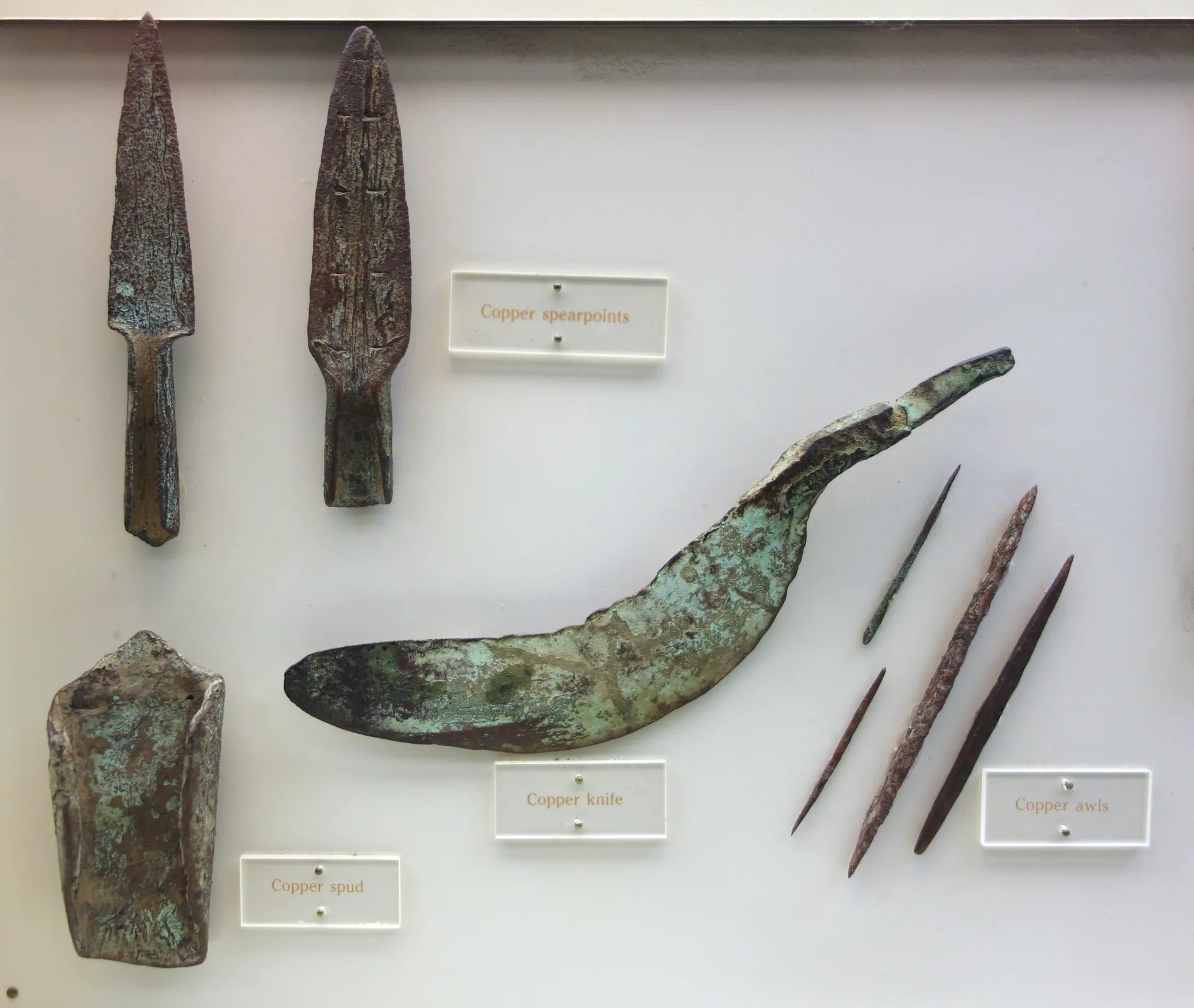
The Old Copper People

On the shore of Lake Superior, Archaic peoples hammered pure native copper into tools. It is among the oldest metalworking anywhere on Earth.
National Park Service
Daderot · CC0
4000 BCE
Buried with copper
Copper tools were buried with the dead at Oconto.
I · Deep Roots
200 BCE

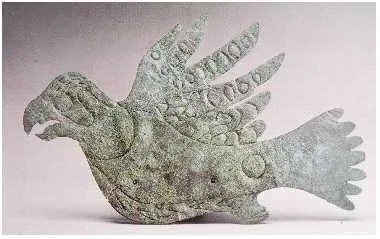
Hopewell trade

Lake Superior copper was worked into falcons in Ohio and traded across a continent.
National Park Service
Wikimedia Commons
I · Deep Roots
1250 CE

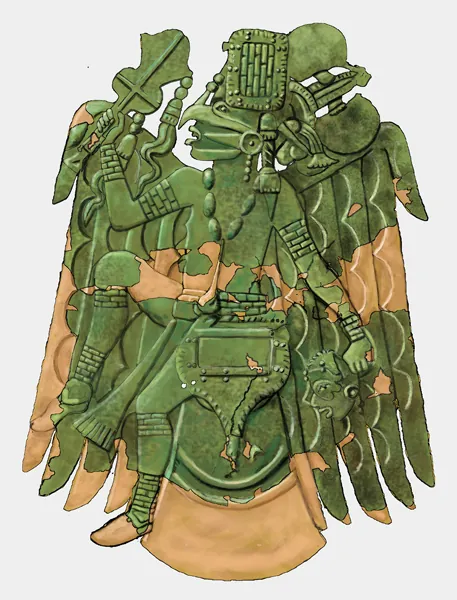
The Birdman of Etowah

Mississippian artisans beat copper into falcon-warriors, carried from Cahokia across half a continent.
Smithsonian Institution
Herb Roe, www.chromesun.com · CC BY-SA 3.0
II
Colonial & Republic
1600s–1830s
The first colonial mines and coins, and Paul Revere's sheet copper.
1644
Prospecting the colonies
New England's alchemist-governor prospects the colonies for metal.
II · Colonial & Republic
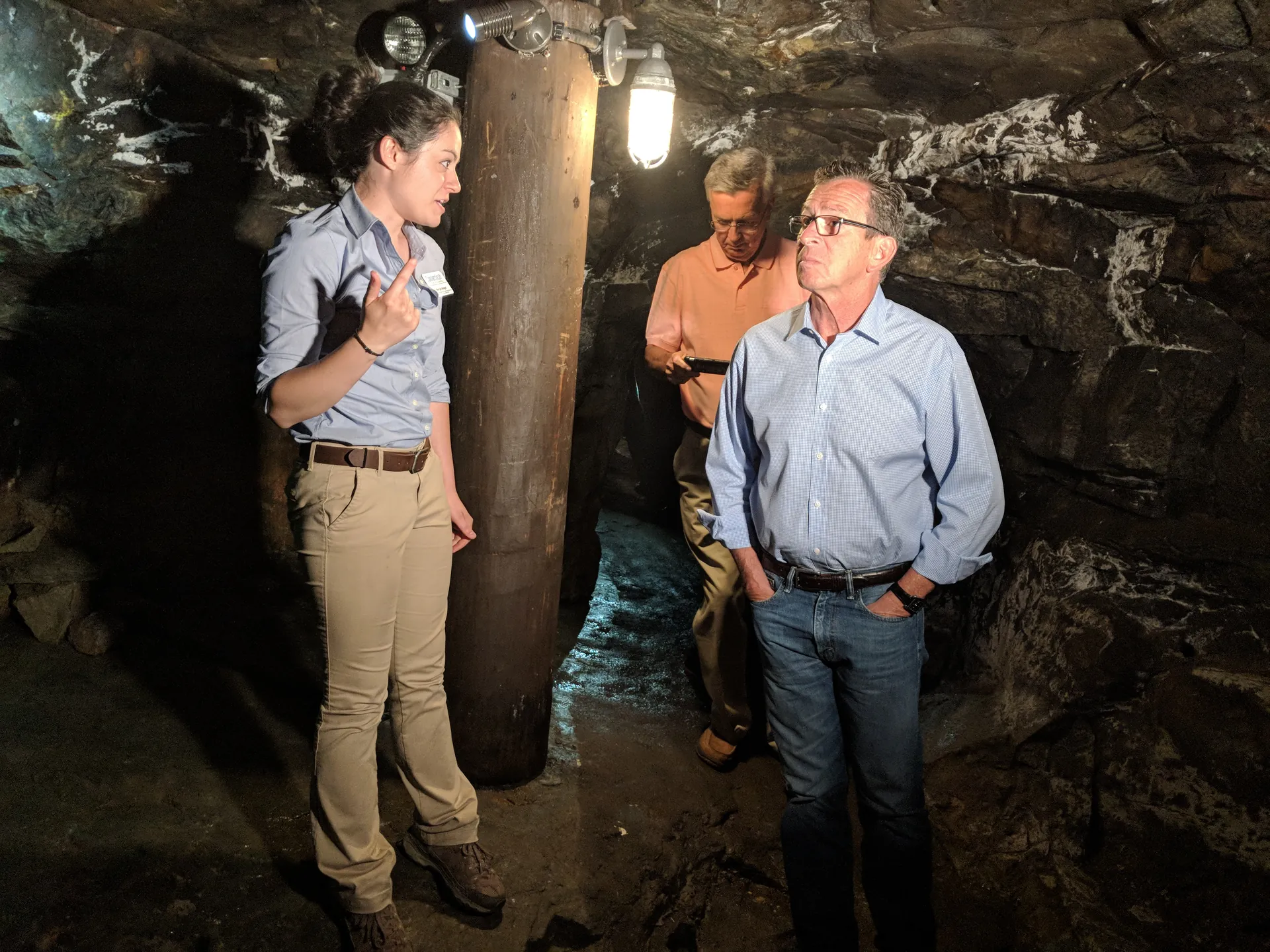
1707

The mine that became a prison

British America's first chartered copper mine ran dry, then held Revolutionary prisoners deep in its worked-out shafts.
Connecticut DECD
Dannel Malloy · CC BY 2.0
1721
First profit in copper
New Jersey's Schuyler mine ships ore to Holland.
1737
The first copper coins
A Connecticut doctor strikes copper coins from his own ore.
1755
The first colonial steam engine
The first steam engine in the colonies is installed to drain the Schuyler mine.
II · Colonial & Republic
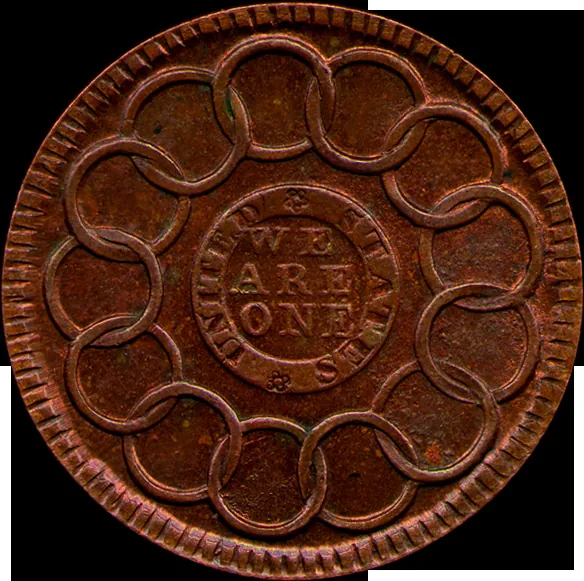
1787

The Fugio cent

The first coin the United States ever issued was copper. Franklin's design read 'Mind Your Business.'
Smithsonian NMAH
Unknown, purportedly Benjamin Franklin. · Public domain
II · Colonial & Republic
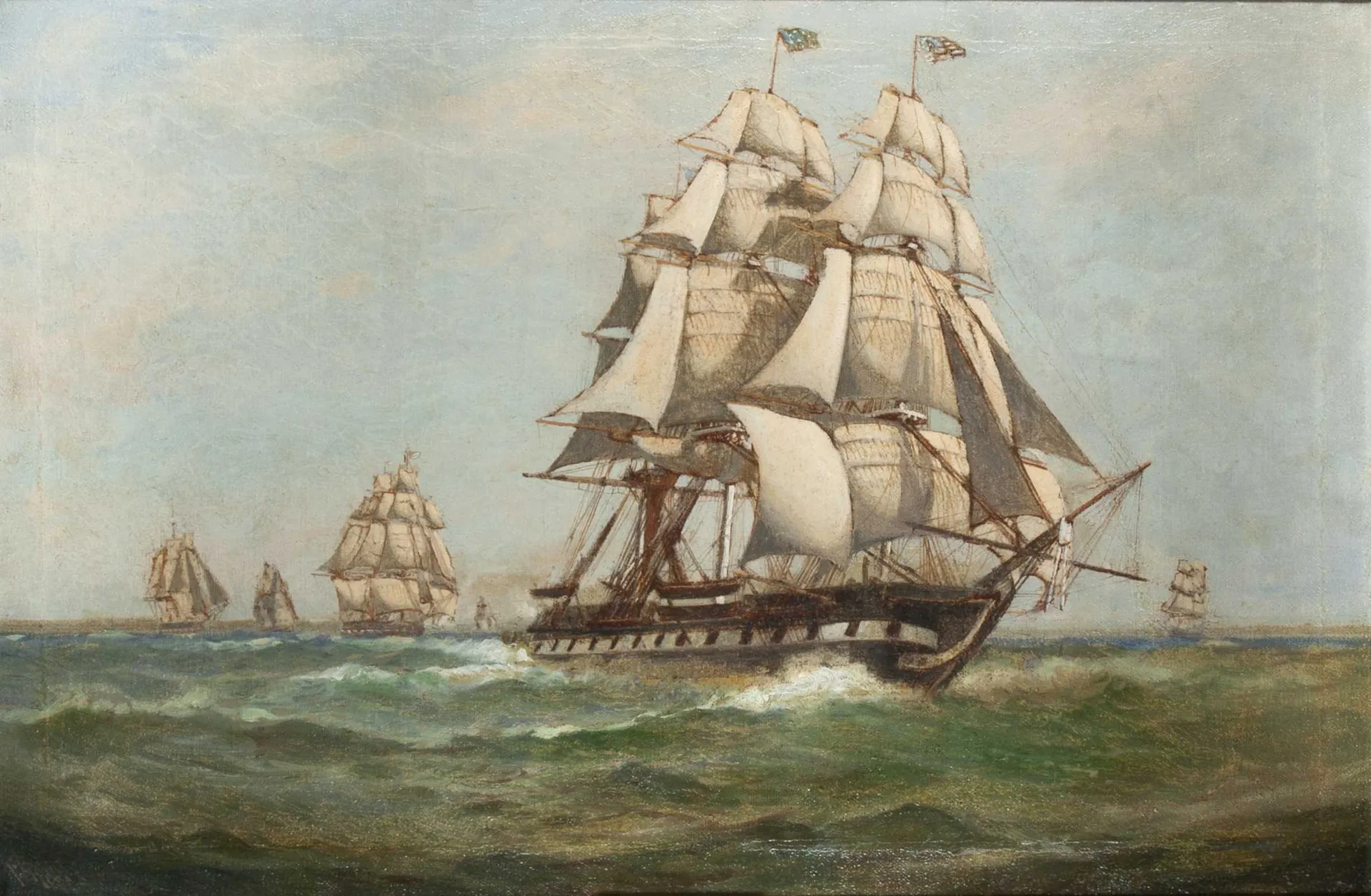
1797

Copper for Old Ironsides

Paul Revere's bolts and spikes held the young navy's most famous frigate together.
USS Constitution Museum
C. Myron Clark · Public domain
II · Colonial & Republic
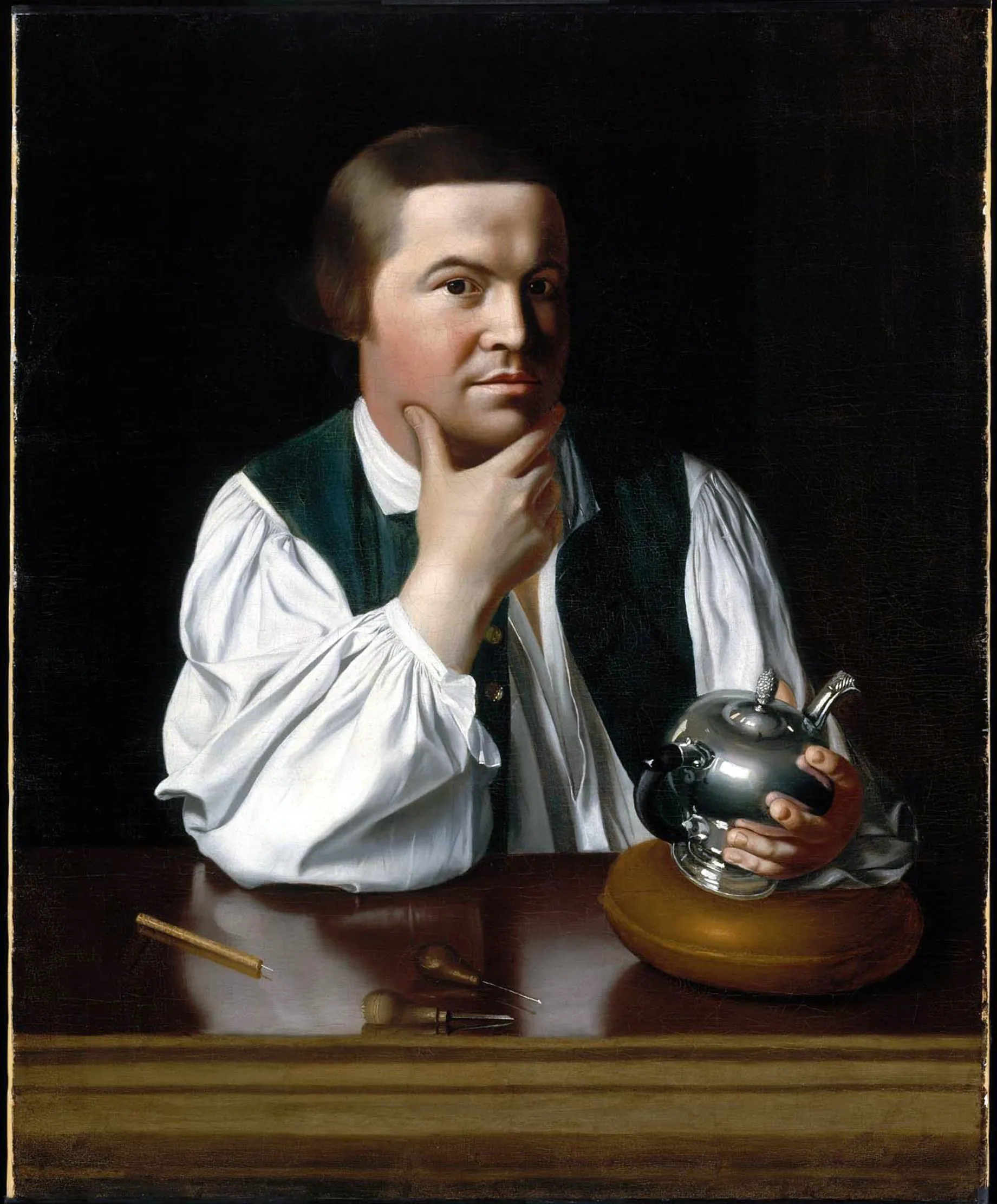
1801

Revere's rolling mill

Paul Revere became the first American to roll sheet copper, ending reliance on British mills.
Paul Revere House
John Singleton Copley · Public domain
III
The Lake Superior Boom
1840–1900
America's first mineral rush, and the decades one Michigan peninsula supplied the nation.
III · The Lake Superior Boom
1841

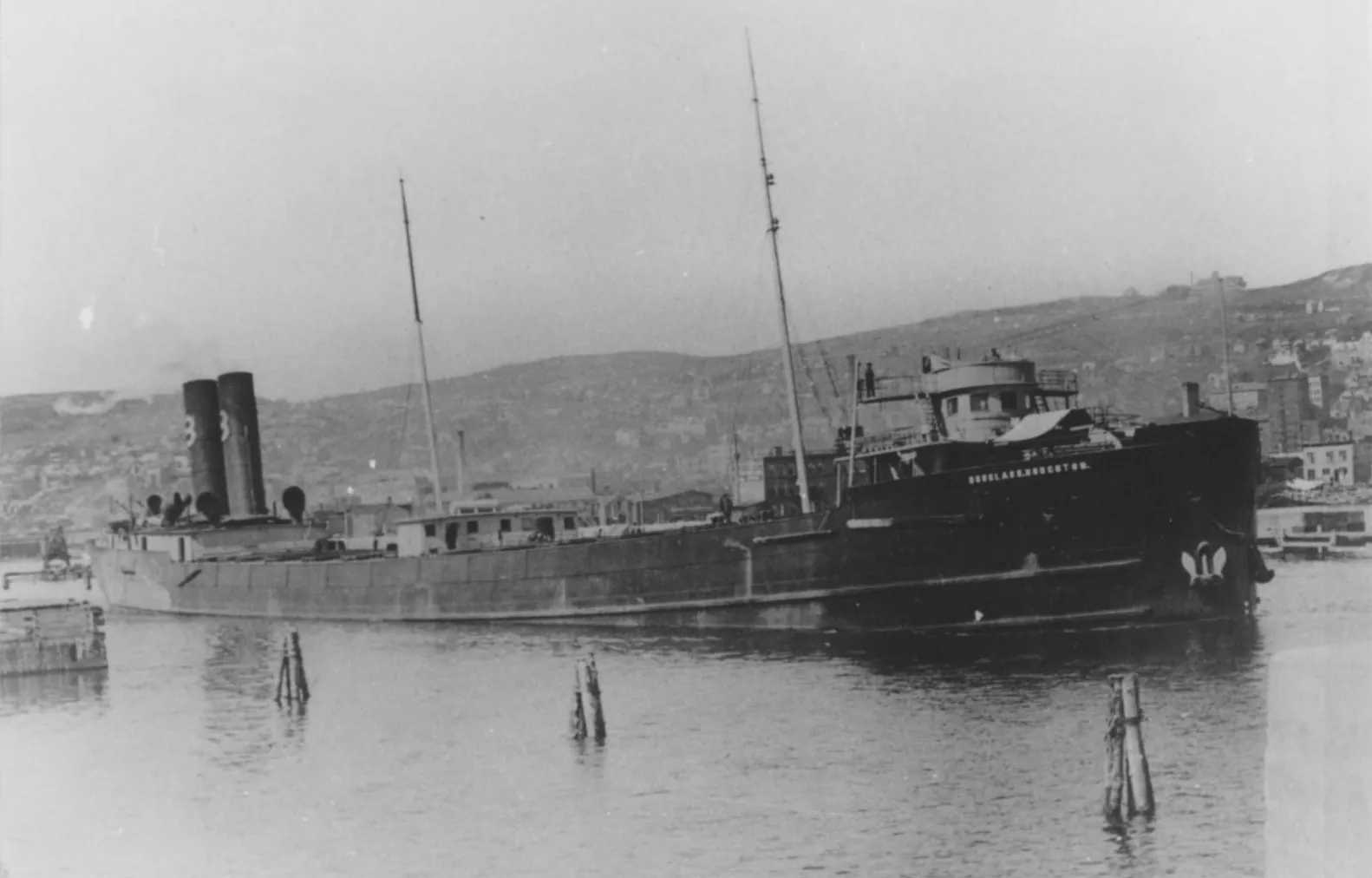
The Keweenaw survey

A state geologist mapped the Keweenaw's copper and set off America's first mineral rush, eight years before California's gold.
Michigan Technological University
United States Army Corps of Engineers · Public domain
1842
The land is ceded
The Ojibwe cede the copper country.
III · The Lake Superior Boom
1843

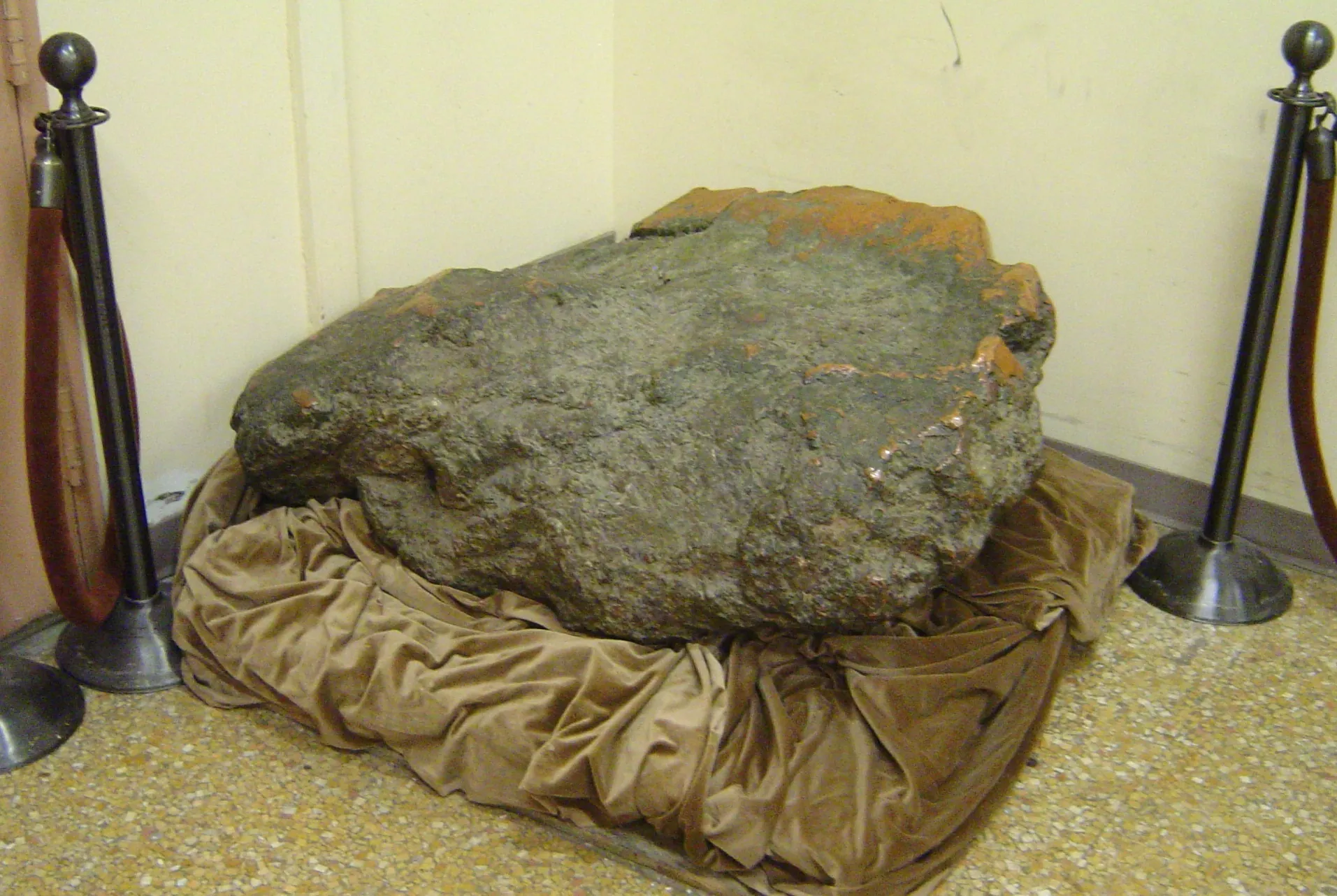
Two tons of pure copper

A single mass of native copper, revered by the Ojibwe, was hauled off to the Smithsonian.
Smithsonian · Michigan EGLE
Ian Shackleford · CC0
1844
Boomtowns and a fort
Copper Harbor fills with prospectors; the Army builds Fort Wilkins to keep order.
1845
The Cliff mine
The Cliff hits mass copper and becomes the nation's top producer.
III · The Lake Superior Boom
1846

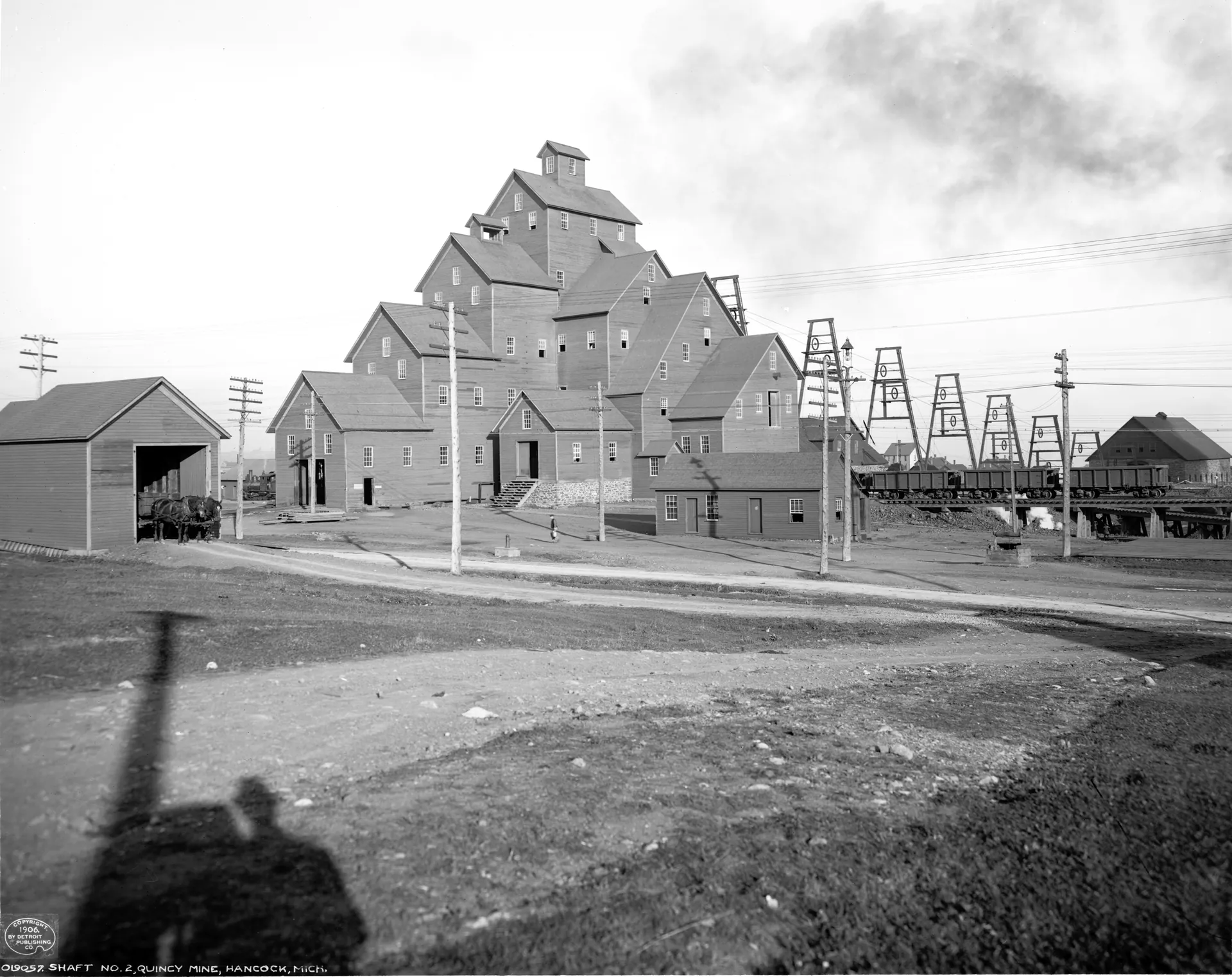
The Old Reliable

Quincy paid a dividend every year for half a century, its shaft sinking more than a mile and a half into rock.
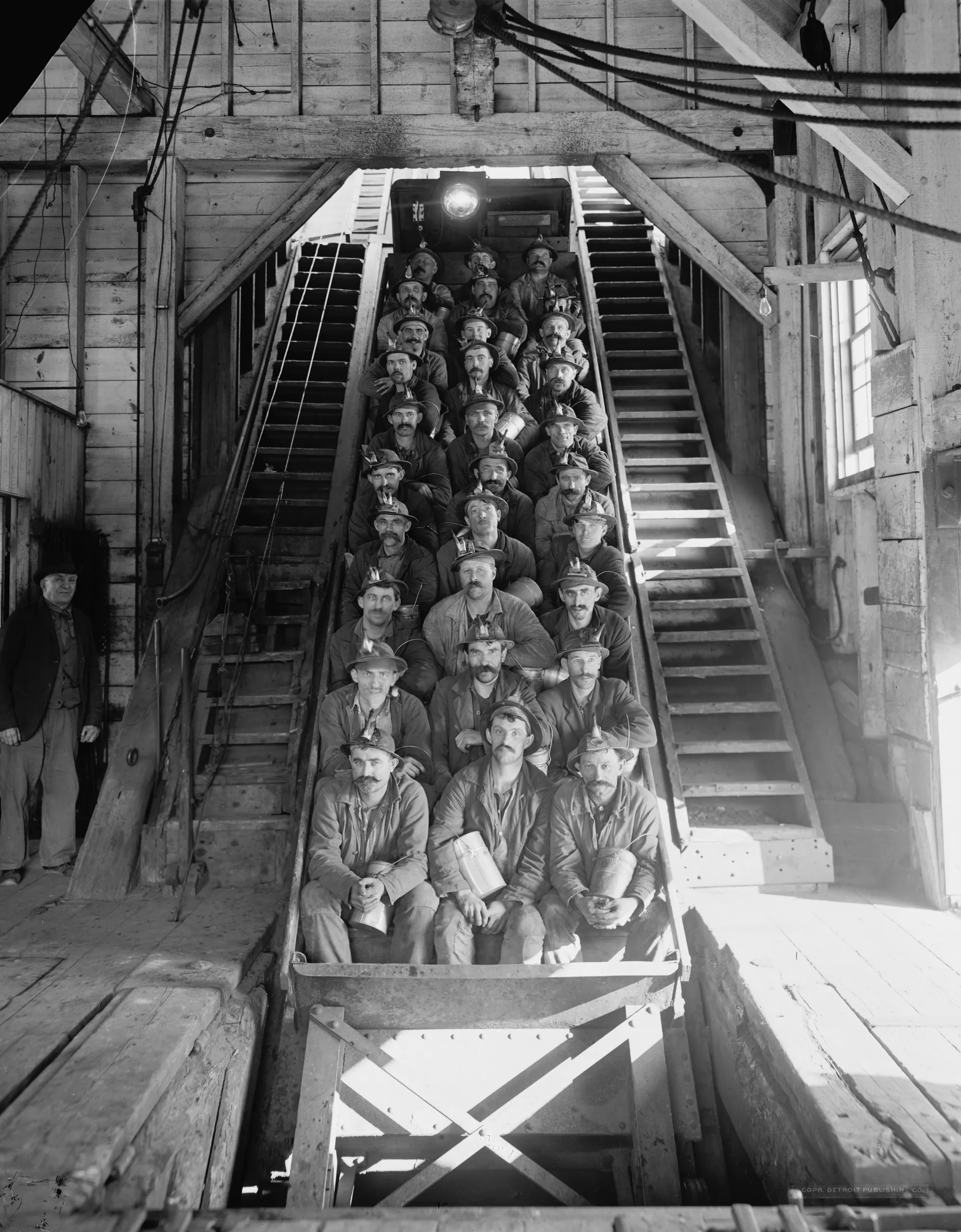
National Park Service
Detroit Publishing Co · Public domain
1856
A 500-ton lump
Miners chisel apart a single mass of pure copper underground.
1863
The Civil War
Michigan copper goes into Union percussion caps, bronze cannon and telegraph wire.
1869
Michigan's share
Michigan mines over 95% of America's copper.
III · The Lake Superior Boom
1871

Calumet & Hecla

One Michigan company produced more than half the nation's copper.
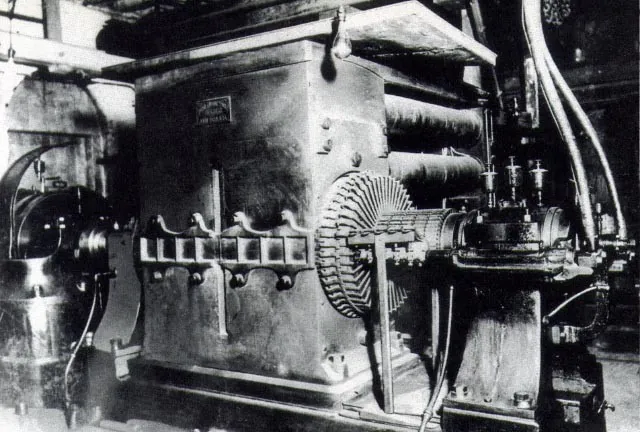
Archives of Michigan
Detroit Publishing Company Collection · Public domain
1887
Montana overtakes Michigan
Montana's copper output passes Michigan's.
IV
The Electrical Age
1880–1913
Butte, Arizona, and the open pit, when copper became the metal that carried electricity.
1880
Digging for silver, finding copper
In Butte, Marcus Daly strikes copper where he expected silver.
IV · The Electrical Age
1882

Pearl Street Station

Edison lit lower Manhattan from the first central power station, and every wire in it was copper.

IEEE ETHW
Unknown author · Public domain
1888
United Verde at Jerome
William Clark invests in the United Verde mine at Jerome, Arizona.
1890s
Electrolytic refining
Electrolytic refining produces copper pure enough for electrical wire.
1893
Butte's miners organize
Butte's miners organize into one of the strongest unions in the country.
1899
The copper trusts
Standard Oil and Guggenheim investors back Anaconda and ASARCO.
IV · The Electrical Age
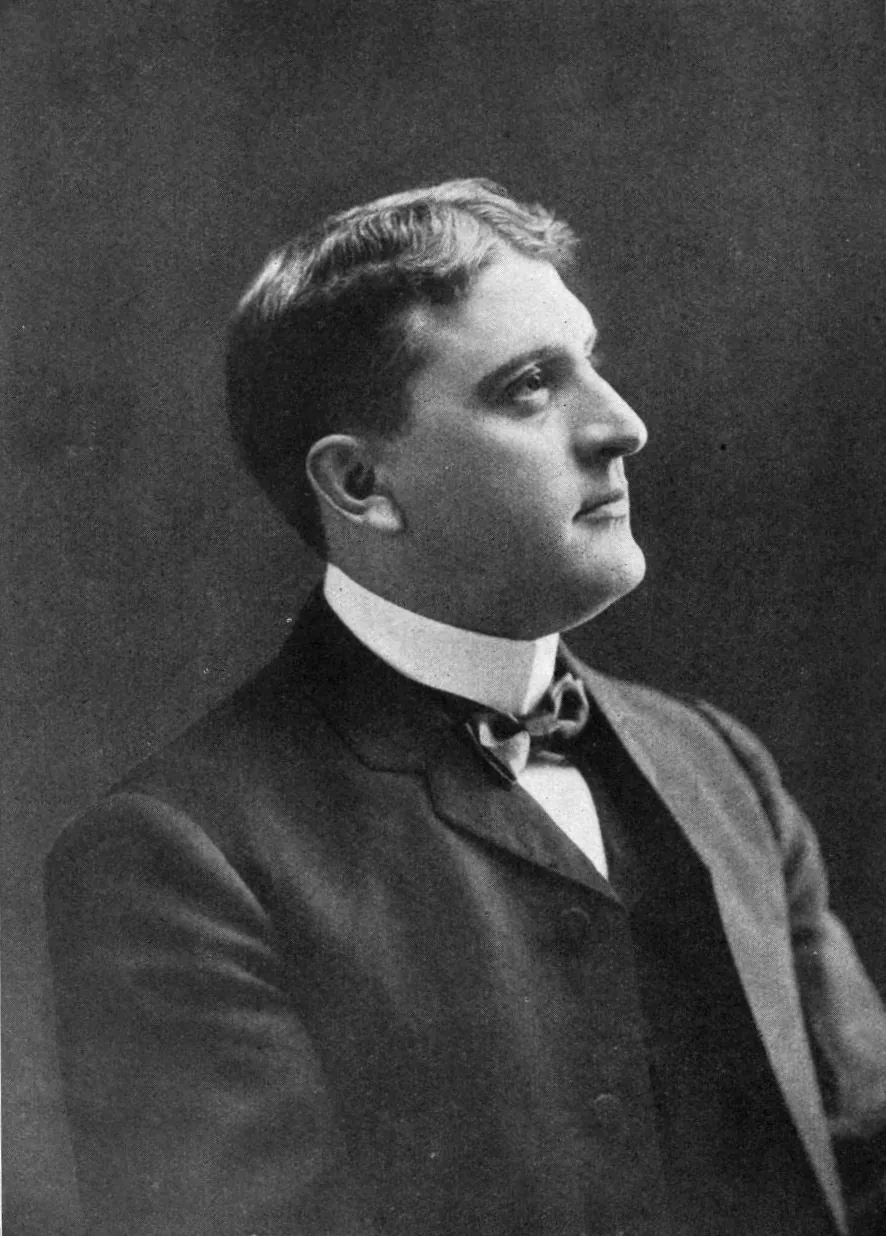
1899

A Senate seat, bought

William Clark bribes his way into the U.S. Senate.
Library of Congress
Library of Congress, Prints & Photographs · Library of Congress (pre-1929; rights not formally evaluated)
IV · The Electrical Age
1906

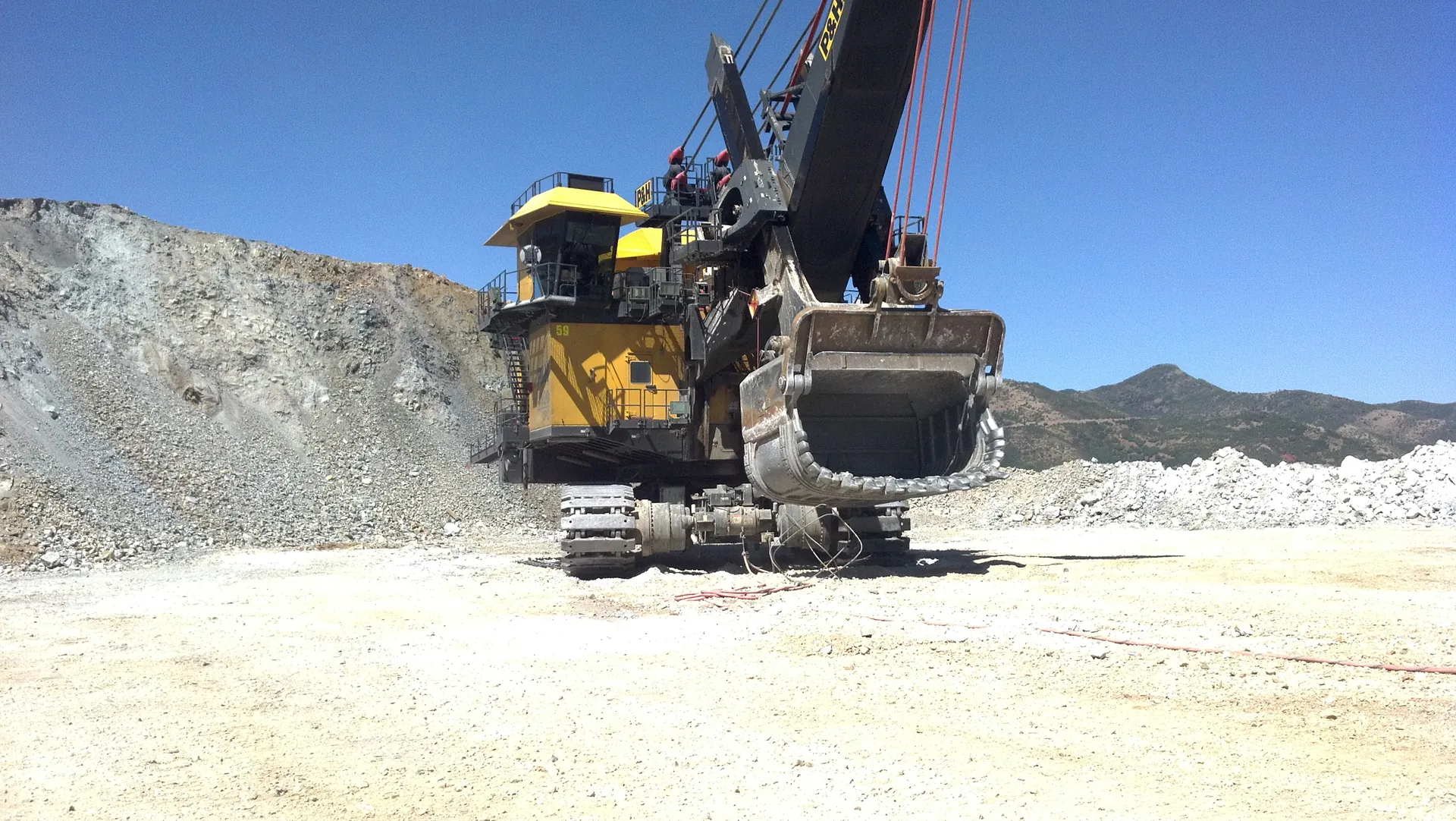
The Bingham Canyon pit

Daniel Jackling's open pit made copper cheap enough to wire the country. The same ground is still being mined.
Bingham Canyon, Utah
Modern photograph · Jet6581 · CC BY-SA 3.0
IV · The Electrical Age
1906

Heinze sells out

Augustus Heinze fought Standard Oil in court, sold out, then helped trigger the Panic of 1907.
Butte-Silver Bow Archives
Unknown photographer · Public domain
V
War & Depression
1914–1945
Copper in two world wars, and the Depression between them.
1914
Wartime prices
Shells and wire push the copper price up, then the price falls after the Armistice.
1917
The Speculator Mine fire
Fire in the Speculator shaft kills 168, the worst hard-rock disaster in the country.
V · War & Depression
1917

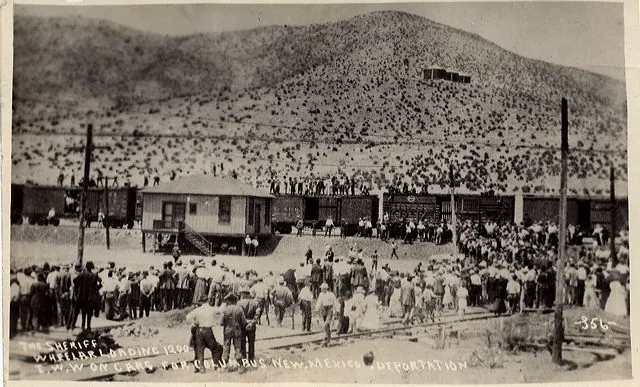
The Bisbee Deportation

During a strike, a company posse seized 1,300 Bisbee miners at gunpoint, loaded them into cattle cars and left them in the desert.
Library of Congress
Published as a postcard circa 1917. Original photographer and publisher not known · Public domain
1930
Six cents a pound
Copper falls to six cents a pound in the Depression.
V · War & Depression
1935

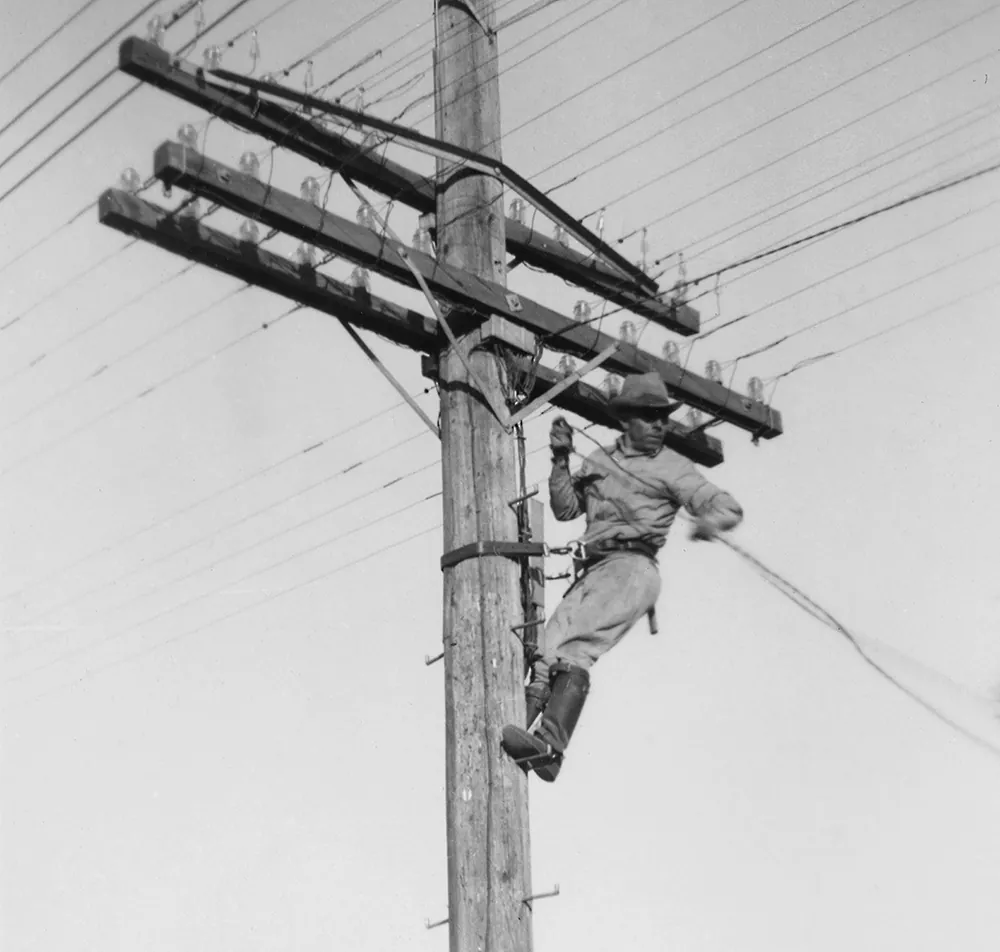
Rural electrification

Federal co-ops string copper line to farms the utilities skipped.
Rural Electrification Administration
Wikimedia Commons · Public domain, 1940
V · War & Depression
1942

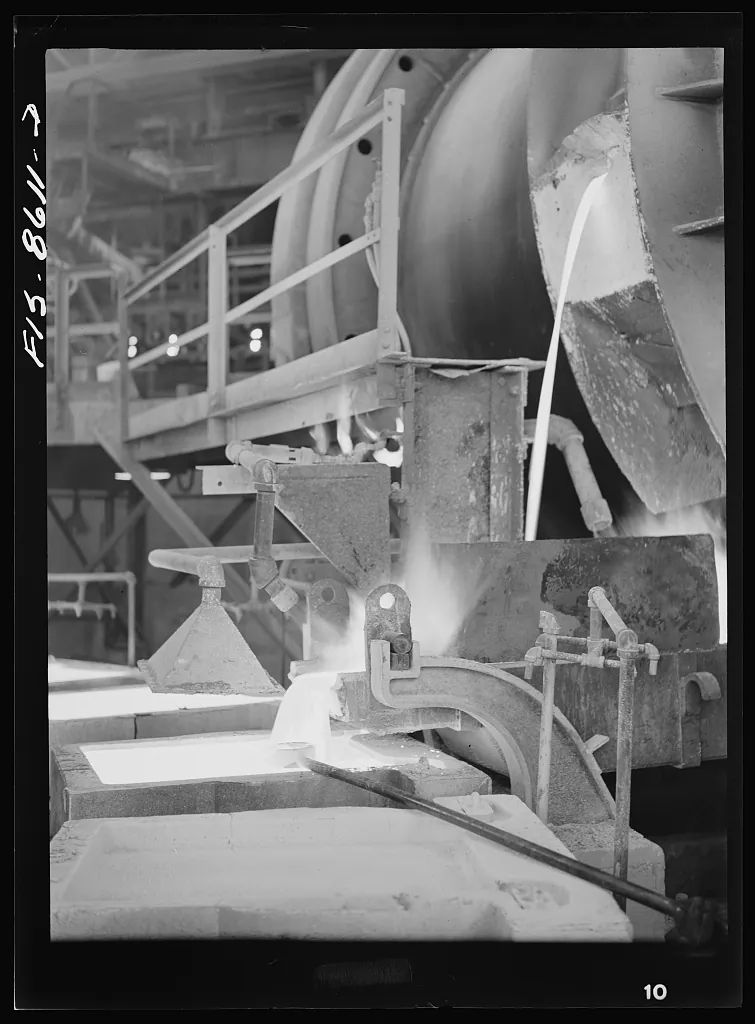
Wartime production

Smelters poured copper around the clock for shells and wiring, while scrap drives collected copper from American kitchens.
Jack Delano, FSA/OWI, Library of Congress
Jack Delano · No known restrictions (LOC, FSA/OWI)
V · War & Depression
1943

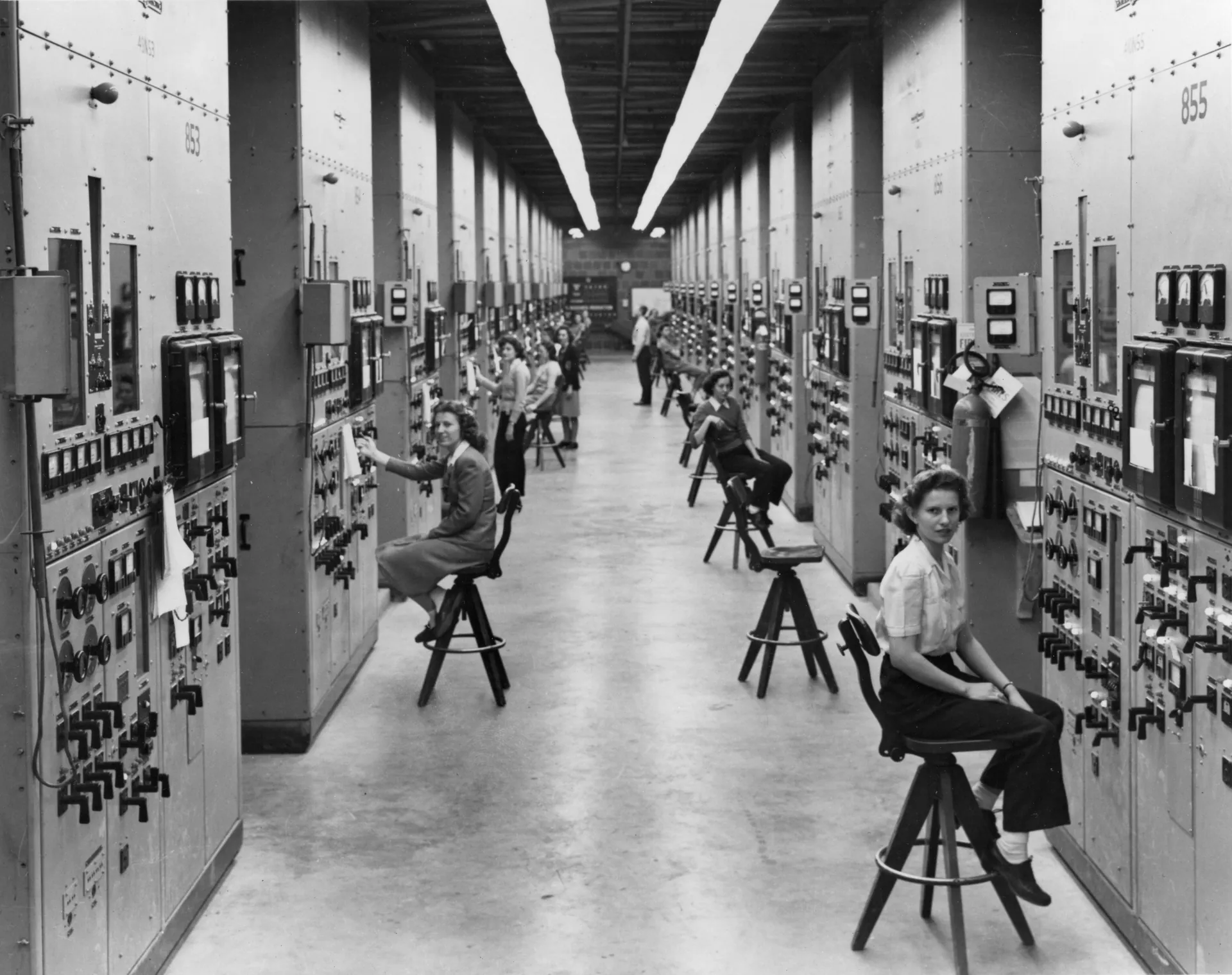
Treasury silver

Too short of copper to wind its atomic electromagnets, the government borrowed 14,700 tons of silver from the Treasury.
U.S. Department of Energy
doe-oakridge · Public domain
V · War & Depression
1943

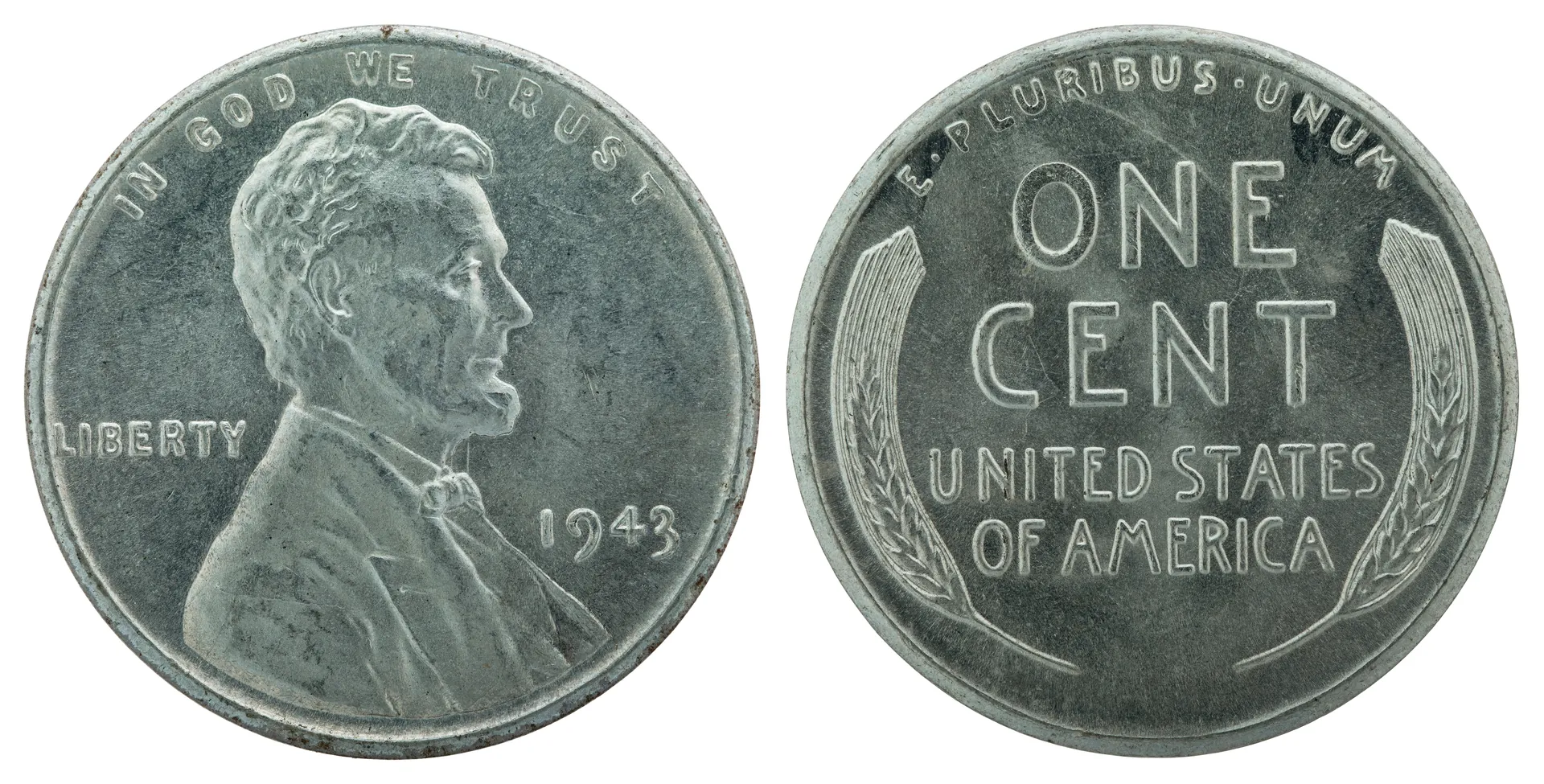
The steel penny

The Mint stamps a billion pennies from steel to save copper for the war.
Smithsonian NNC
National Numismatic Collection, Smithsonian · CC0 / Public domain
VI
Boom & Reckoning
1945–2019
The environmental cost of mining, and the closing of American smelters.
1970
The Clean Air Act
The Clean Air Act puts federal limits on smelter smoke.
1976
Sixteen primary smelters
Sixteen primary copper smelters operate in the United States. Two operate in 2026, with a third in care and maintenance (Copper Development Association testimony to the U.S. House, 29 April 2026).
1980
The Anaconda smelter
The Anaconda smelter in Montana shuts down.
VI · Boom & Reckoning
1982

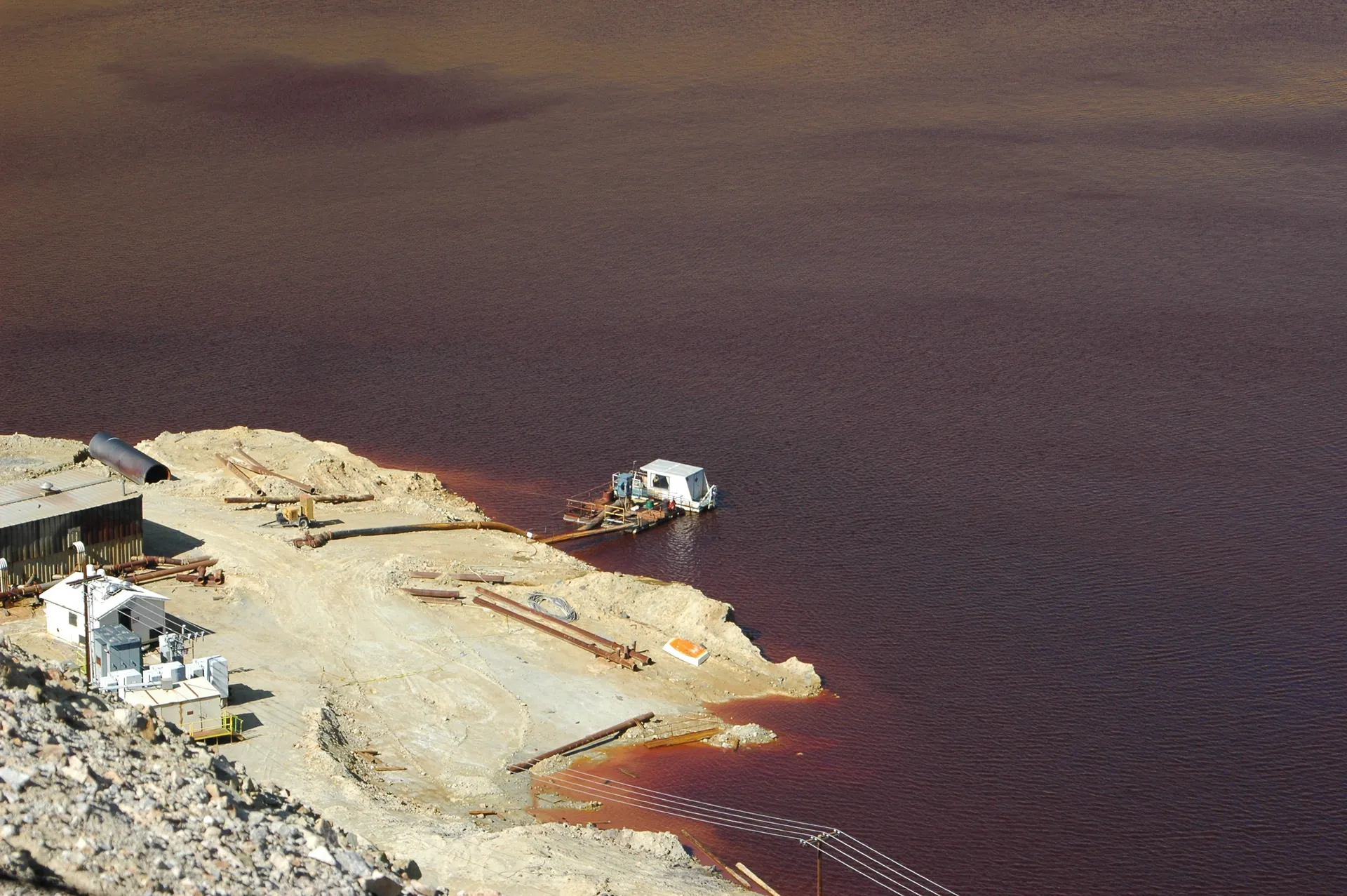
The Berkeley Pit

Butte's Berkeley Pit filled with acid water after the pumps shut off.

Smithsonian Magazine · U.S. EPA
Matt Dente from Seattle, United States · CC BY-SA 2.0
VII
Reindustrialization
2020–Today
Rising demand and import reliance.
2021
The IEA on copper
The IEA names copper a bottleneck of the clean-energy shift.
2025
A 50% tariff
A 50% Section 232 national security tariff on semi-finished copper takes effect on 1 August. Refined copper carries no rate.
2026
Oak Flat
Arizona's largest untapped deposit is weighed against the sacred ground above it.

Where things stand

0%
of the refined copper America uses is imported.
USGS MCS 2026 (2025 estimated)
#0
America's rank among copper producers, behind Chile, Congo (Kinshasa), Peru, China and Russia.
USGS MCS 2026 (2025 estimated)
0×
projected U.S. copper demand in 2035, relative to 2021.
S&P Global, Inflation Reduction Act: Impact on North America Metals and Minerals Market, Aug. 2023
Keep reading

Also in Perspective

Present
The American Copper Imperative

The United States consumes about 2,200 kt of refined copper a year, mines about 1,000 kt, and refines 850 kt. What closing that gap actually takes.

Read →
Future
Copper: The Reindustrialization Metal

America has decided to build again, and copper is the one material every part of it depends on. Where copper sits in the rebuilding of American industry.

Read →
Projects
Projects

Copper projects from exploration to refining, in the United States and allied countries, with the status of each.

Read →
Image credits & sources
  • Historical photographs and prints are drawn from public-domain and Creative-Commons collections, principally the Library of Congress Prints & Photographs Division, the Detroit Publishing Company Collection, Wikimedia Commons, the U.S. Geological Survey, and the Smithsonian Institution. Each image carries its own source and rights line in the caption beside it.
  • The narrative and dates in this feature follow Falcon Copper’s sourced timeline of copper in America; figures reproduce their original published sourcing.
Important notice

This feature is a historical narrative provided for general information and education only. Third-party figures are reproduced with their published sourcing; Falcon Copper does not independently verify third-party data and does not undertake to update it.

Nothing on this page is an offer to sell or a solicitation of an offer to buy any security, and nothing here constitutes investment, financial, legal, or tax advice. See full disclosures.